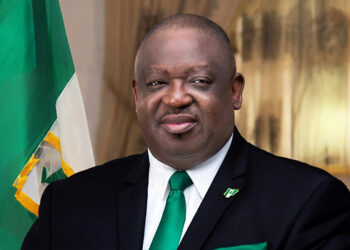


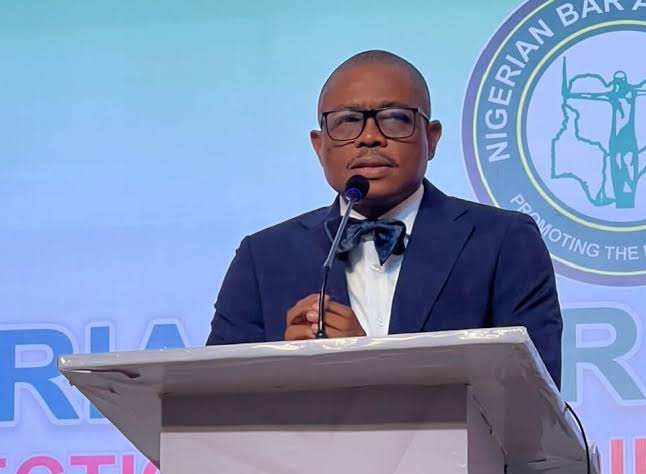
The President of the Nigerian Bar Association (NBA), Afam Osigwe, SAN, has raised concerns about the state of Nigeria’s judiciary.
He spoke during an interview on Arise Television’s Prime Time on Wednesday.
Osigwe alleged that some judges and magistrates act under the influence of politicians and powerful individuals. He claimed that courts sometimes deny bail in cases where the law permits it.
He did not name specific judges or cite particular cases.
Allegations on Cybercrime and Defamation Charges
Osigwe argued that authorities use cybercrime and criminal defamation charges to target critics.
“Free speech is being muzzled in Nigeria under the guise of charging people to court and investigating them for cybercrime and criminal defamation,” he said.
He maintained that many of the offences are bailable. However, he alleged that some courts refuse bail without sufficient legal justification.
These claims have not received an official response from the judiciary at the time of this report.
Legal Framework: Cybercrime Act and the Constitution
Nigeria enacted the Cybercrimes (Prohibition, Prevention, etc.) Act in 2015. Lawmakers designed the Act to address online fraud, identity theft, and digital offences.
Critics, however, have questioned how authorities apply certain provisions of the law. They argue that some officials use it in cases involving online criticism.
Section 39 of the Constitution of the Federal Republic of Nigeria guarantees freedom of expression. The Constitution allows restrictions only under defined legal conditions.
Legal analysts often stress that courts must balance national security and public order with civil liberties.
Judicial Independence and Democratic Accountability Osigwe said public office holders must accept scrutiny in a democracy. He warned that limiting criticism could weaken democratic institutions.
He added that if courts side with political actors to silence critics, public trust in the judiciary may decline.
Nigeria’s judiciary plays a central role in election disputes and constitutional matters. Courts frequently decide cases involving political parties and the Independent National Electoral Commission (INEC).
Observers say judicial independence remains critical to Nigeria’s democratic stability.
NBA’s Advocacy Role The Nigerian Bar Association has consistently defended the rule of law. The body often speaks on constitutional rights and institutional reforms.
Past NBA leaderships have challenged executive actions they considered unconstitutional. The association has also supported electoral and judicial reforms.
Osigwe’s latest remarks add to ongoing debates about free speech and the enforcement of cybercrime laws in Nigeria.