

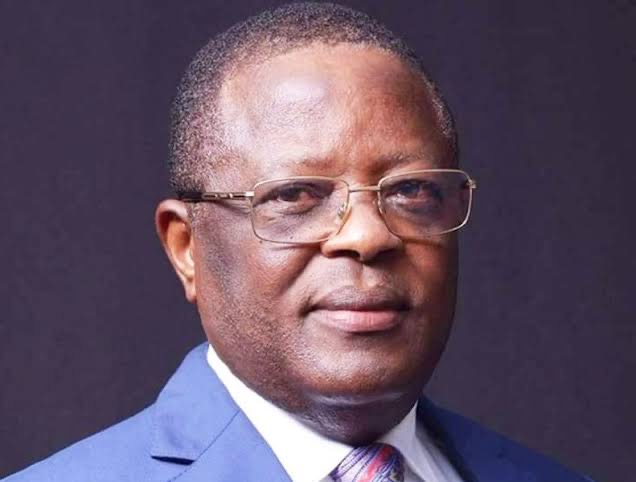
Nigeria’s Minister of Works, David Umahi, has pledged to resign if the ongoing Abuja–Kaduna–Kano Road project fails any independent quality test.
Umahi made the declaration on Wednesday during his ministry’s budget defence before a joint session of the National Assembly of Nigeria.
He told lawmakers that he was ready to subject the project to independent technical assessment. He insisted that the road meets required engineering standards.
Lawmakers Question Contract Award
During the session, several legislators raised concerns about the award of a section of the project to a company they described as relatively unknown in road construction.
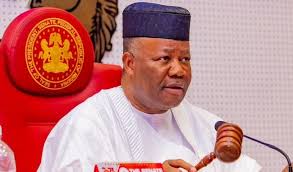
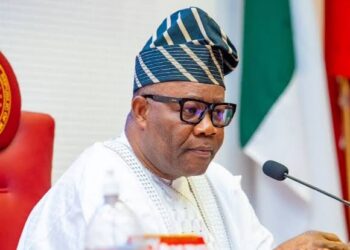
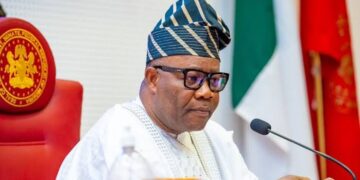
Senator Adams Oshiomhole, who represents Edo North, questioned why the ministry reassigned the contract from an established construction firm to another company.
He argued that the contractor was not widely recognised in the road construction sector. Some lawmakers also referenced reports that the company had previously engaged in generator sales.
The lawmakers did not publicly present technical evidence alleging substandard work during the hearing.
Umahi dismissed arguments about the contractor’s past business activities. He urged lawmakers to focus on performance and output.
“I’m just hearing about Maikano for the first time. Whether they are selling goats or cows, they are doing well,” he said.
Umahi expressed satisfaction with the quality of work on the Abuja–Kaduna stretch. He challenged the lawmakers to organise a site inspection.
“Bring the best of your concrete testers. If you test it and it fails, I will throw in the towel,” the minister stated.
The Abuja–Kaduna–Kano highway serves as a major economic corridor linking Nigeria’s Federal Capital Territory to key commercial hubs in the North-West. The road supports trade, agriculture, and interstate transport.
Successive administrations have prioritised its rehabilitation due to security concerns, heavy traffic, and long-standing infrastructure deficits.
The Ministry of Works oversees federal road construction, while the National Assembly exercises oversight through budget review and project monitoring.
Budget defence sessions provide lawmakers with an opportunity to scrutinise spending plans and ongoing projects. Committees often request documentation, contractor details, and technical reports before approving allocations.
Umahi’s resignation pledge underscores the political sensitivity surrounding large-scale infrastructure contracts. However, no independent test results were presented at the session.
As of the time of filing this report, the Ministry of Works has not announced a timeline for any external quality assessment of the project.